Academic Library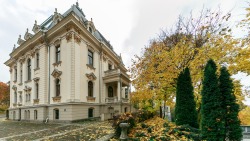
The library is not only the institute’s primary repository of scholarly materials, but also an important monument to Lithuanian national culture, built up over several decades through the efforts of many prominent figures in science and culture, with the support of the general public. Its collections include publications gathered by the Lietuvių mokslo draugijos bibliotekos, among which are valuable old books on Lithuanian studies, unique periodicals and cartographic materials, as well as books from Jonas Basanavičius’s personal library.
The manuscript and photo collections are particularly rich—they include the archives of Lithuanian writers and scholars of Lithuanian studies, as well as those of the Lithuanian Scientific Society and its chairman, Dr. Jonas Basanavičius, which hold great scientific and historical value.
Since 2005, the library has been a member of the Lithuanian Association of Research Libraries (LMBA). The association’s main objectives are to subscribe to electronic databases for its members and other libraries, and to promote the creation of virtual libraries, as well as the development and implementation of advanced technologies and innovative projects in libraries. On September 20, 2016, an agreement was signed between the Central Project Management Agency and the LMBA regarding the implementation of the project “eMoDB.LT3: Opening Electronic Scientific Databases to Lithuania – Phase Three”. The project ensures access to the most frequently cited databases, which is essential for activities related to the implementation of priority research and experimental (social, cultural) development and innovation directions and their priorities (SMART). The Institute’s researchers have access to 10 subscribed databases, for which licenses have been signed for the entire country. Thanks to the project, eMoDB licensing and administration were automated, and a set of training modules adapted for self-directed learning in a virtual environment was created.
Since 2010, the library has been a member of the Consortium for the Support and Development of the Information Infrastructure for Science and Studies of Lithuanian Academic Libraries (LABT). Based on the Aleph integrated library system, library information systems (LIS) were developed, enabling the implementation of the core Aleph 500 modules in the institute’s library. These modules allow for the execution of essential library processes via computer in the digital environment—including cataloging of publications, information retrieval, ordering of publications, circulation/return, and registration of the institute’s staff scientific publications in the Lithuanian Scientific Publications Database (LietSist PDB).
In 2012, as part of the development of the LABT project and the implementation of projects supported by the European Union Structural Funds, the Lithuanian Scientific Publications Database was integrated into the Lithuanian Academic Electronic Library (eLABa), which is the official Lithuanian information system for electronic documents in science and studies, functioning as a national joint open-access repository. The main objective of eLABa is to create an environment and tools for preparing, collecting, long-term preservation, and presenting electronic documents on Lithuanian science and studies to readers through various output methods, thereby laying the groundwork for the formation of the Lithuanian Academic Electronic Library. Each year, this repository is supplemented with electronic bibliographic records created by the LLTI library—books, serials, and periodicals, as well as scientific publications.
Since 2018, the library, together with the folklore archive, has been participating in the institute’s digitization project “Development of a Virtual Cultural Space Meeting the Needs of Society,” which is carried out in collaboration with the Martynas Mažvydas National Library of Lithuania (VEPIS III).
In 2013, the Lithuanian National Committee for “Memory of the World” recognized the original autograph manuscripts of Kristijonas Donelaitis (Metai: Spring Revelries and Summer Works, along with the preface; two letters) as heritage objects of regional significance, and in 2019, Simonas Daukantas’s autographs of original works and translations—as documentary heritage objects of national significance—and included them in the Lithuanian National Register of the UNESCO “Memory of the World” program.