Academic Library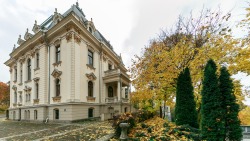
Lietuvių mokslo draugijos biblioteka (Library of the Lithuanian Scientific Society)
The predecessor of the Library of the Institute of Lithuanian Literature and Folklore was the Library of the Lithuanian Scientific Society, established in 1907.

From the very beginning, the Society had paid due attention to the collection of Lithuanian manuscripts and documentary materials; therefore, in addition to the book collection, a manuscript archive was established. In 1908, the "Birutė" Society was the first to transfer the archive of the folklorist and lexicographer, Priest Antanas Juška, which included the manuscript of his Lithuanian dictionary and a Polish-Lithuanian glossary, as well as material for a Lithuanian-Russian dictionary by the priest’s brother, Jonas Juška. The Society also donated Dionizas Poška’s letters and the manuscript of his Polish-Lithuanian dictionary. A relative of Motiejus Valančius donated the priest’s memoirs, while Juozas Tumas donated Valančius’s correspondence with Prelate Tomas Dobaševičius, Kazimieras Jaunius’s grammar, *Mokslas dvasiškos iškalbos*, and the plays of Aleksandras Fromas-Gužutis. Felicija Bortkevičienė and Donatas Šidlauskas donated letters by Jonas Biliūnas. The Burba family, landowners of Belvedere, donated about a hundred manor documents from the 16th–18th centuries. In 1911, Dr. Ferdinandas Kauneckis donated the library (8 boxes) of his relative Simonas Daukantas (Daukantas’s sister Anastazija had married Kauneckis’s great-grandfather) and a substantial collection of manuscripts (“Pasakos masių” and other valuable writings). The Society’s archives also include manuscripts by many Lithuanian writers and public figures: Antanas Klementas, Antanas Savickis, Kajetonas Nezabitauskis, Laurynas Ivinskis, Vincas Juzumas, Valerijonas Ažukalnis-Zagurskis, Jurgis Sauerveinas, Antanas Baranauskas, Klemensas Kairys, Silvestras Baltramaitis, Kazimieras Jaunius, Vincas Pietaris, Mečislovas Davainis-Silvestraitis, and many others. The archives of certain organizations were also transferred to the Society: the editorial office of "Aušrinė," the "Atžala" troop, the Pharmacists’ Union, and the Moscow Drama Artists’ Society. The archive also collected and preserved the LMD’s own documents: records of current affairs, minutes of the society’s board meetings and general assemblies, and more. Here one could find documents from the era of Tsarist Russia and the German occupation. Some of the manuscript material was purchased. These included various letters and documents from the 14th–19th centuries pertaining to the Kaunatava and Narbuto manors, the manuscripts of Teodoras Narbutas, and the diary of J. Franckevičius, the lord of the Ukmergė manor, written between 1766 and 1782. However, the largest part of the archive consisted of folklore collections. A Folklore Commission (chaired by Kazys Grinius) was formed, which issued a call urging the collection of songs and melodies, prepared a booklet titled "A Brief Program for Collecting Folklore," and acquired a phonograph to record song melodies. By 1910, the commission had collected more than 400 songs and their melodies, and by 1914, approximately 8,000 songs with musical notation. The manuscript archive was managed by Mykolas Biržiška.
Materials for the LMD Museum were also collected: exhibits in archaeology, ethnography, and history were gathered. The main sections of the museum are: ethnographic, archaeological, historical, and natural history. The Lithuanian American Association donated collections of Lithuanian ethnography that had been exhibited at the 1900 World’s Fair in Paris. The Vilnius Lithuanian Art Society donated a collection of folk art, which included a unique collection of Easter eggs. And LMD members themselves donated their own individual finds or collections. Petras Vileišis donated a collection of old coins purchased from the relatives of Vincas Pietaris; priest Jonas Žiogas—a collection of his own photographs; Vladas Nagevičius, Jonas Basanavičius, and A. Špokevičius—archaeological finds from burial mound excavations; P. Jurskis—a paleontological collection consisting of Mesozoic fossils. A significant number of exhibits were donated by the Archaeological Commission in St. Petersburg. The History Department housed a collection of ceramics, including ancient castle tiles, while the Natural History Department held human skulls discovered during Basanavičius’s excavations. The Society also organized expeditions. During these trips, while searching for museum exhibits, society members explained to local residents the significance of material historical artifacts and encouraged them to collect them. The museum also collected household and agricultural tools, metal objects, and horse tack. The ethnography section housed folk sashes and aprons, hand-woven fabrics, knitted items, and folk musical instruments. The society also collected works of art—paintings, sculptures, and busts. The museum was well-attended. The majority of visitors were schoolchildren and students on field trips, and foreign guests also stopped by.
The first librarian was Antanas Smetona, in whose apartment one room housed the society’s collection in 1907. In addition to Smetona, the books were organized by Jurgis Šlapelis and Petras Karazija. The number of books continued to grow, so they needed to be cataloged. Historian Mykolas Biržiška willingly undertook this task. The books were divided into three groups: Thracia, Lituanica et Prussica, and Medicina. Basanavičius managed the books on Thracian studies, two cabinets of which he had brought from abroad. As the collection grew, another small room was rented near St. Nicholas Church, and in 1908—an apartment in the Franciscan monastery on Lydos Street. When the war began and the Germans occupied Vilnius, Basanavičius himself moved into the library premises to protect the LMD’s accumulated assets; in 1917, he demanded larger premises on Aušros Vartų Street from the German authorities. In 1920, the society was granted as many as 16 rooms in the home of Dr. Andrius Domaševičius on Gimnazijos Street. Having amassed a substantial collection of books and a manuscript archive, the LMD sought to make these assets accessible to researchers and the Lithuanian public. After compiling a book catalog and organizing the available manuscripts, permission was granted in 1909 by the Governor of Vilnius to open a reading room, which operated three days a week. Basanavičius was on duty there during the day, and the library’s librarian in the evenings.
When the Poles occupied the Vilnius region, the LMD and its cultural assets remained in Vilnius. The occupying authorities conducted frequent searches, confiscating manuscripts and books, and the collections saw almost no new additions. After the death of Jonas Basanavičius, the LMD library was closed for some time. Antanas Valaitis and Alfonsas Bielinis were appointed as librarians. They described the collections stored on Gimnazijos Street as follows: "there are about 1,000 copies of very worn-out books, one hundred and fifty sets of various newspapers, several thousand scattered books and brochures in the first hall, over 20 boxes haphazardly filled with various museum collections, a dozen or so sacks of unsorted letters and manuscripts, many of the museum collections dusty and decayed..." The Society also rented the second floor of Domaševičius’s house and hired seven volunteers. Over the course of a year, most of the collection was organized: printed materials and manuscripts were sorted, books were selected as much as possible and cataloged into separate collections, museum artifacts were packed into boxes, and paintings, statuettes, and busts were organized. A museum room dedicated to Jonas Basanavičius was also set up here, featuring his furniture and personal items, which were donated to the society by Andrius Domaševičius. By the end of 1927, the library and reading room had resumed operations, and a book subscription service was established. In 1930, over 2,000 readers (mostly schoolchildren and students) used the reading room.
In 1932, after the LMD, together with the “Ryto” Society, purchased the Vileišis House in Antakalnis, the library and all the museum collections were moved there. This was already the fifth relocation of the society’s property, the most arduous one, involving considerable expenses and losses to the archive and museum collections. The second floor of the Vileišis mansion was handed over to the society, with an entrance from the courtyard and a staircase from the kitchen, as well as the attic and the basement. The “Ryto” Society was established on the first floor, while the rooms facing the street were left for private residents. The basement housed the archive, the museum, and duplicate books, while the library itself occupied two rooms on the second floor. Later, after the “Ryto” Society moved out, a museum room dedicated to Dr. Basanavičius was set up in the first-floor room (Mrs. Vileišienė’s boudoir), and the dining room became the Literature Museum.
In 1938, the LMD premises were occupied by the Polish police, who conducted a search for three months, and on May 24, the Polish Minister of Internal Affairs confirmed that the LMD was being closed. After Vilnius was returned to Lithuania, the society’s property was taken over by the Lithuanian state. In 1940, the property was officially transferred to the Institute of Lithuanian Studies, and in 1941, to the Academy of Sciences of the Lithuanian SSR. The Institutes of Lithuanian Literature and the Lithuanian Language were established in the Vileišis Palace. The outbreak of World War II did not cause significant damage to the LMD’s property, as the resourceful librarian Pranas Razmukas managed to protect the main building from looting and demolition. In 1945, the collections belonged to the Institute of Lithuanian Literature. In 1946, Kostas Korsakas was appointed as the new director, replacing Vincas Mykolaitis-Putinas. On his orders, the collections of archaeology, ethnography, folk costumes, and numismatics were transferred to the State National Ethnographic Museum, while other non-specialized manuscripts and printed materials were transferred to the Library of the Lithuanian Academy of Sciences. In 1952, the Institutes of Lithuanian Literature and the Lithuanian Language were merged into a single Institute of the Lithuanian Language and Literature; since 1990, the LMD collections have belonged to the Institute of Lithuanian Literature and Folklore.